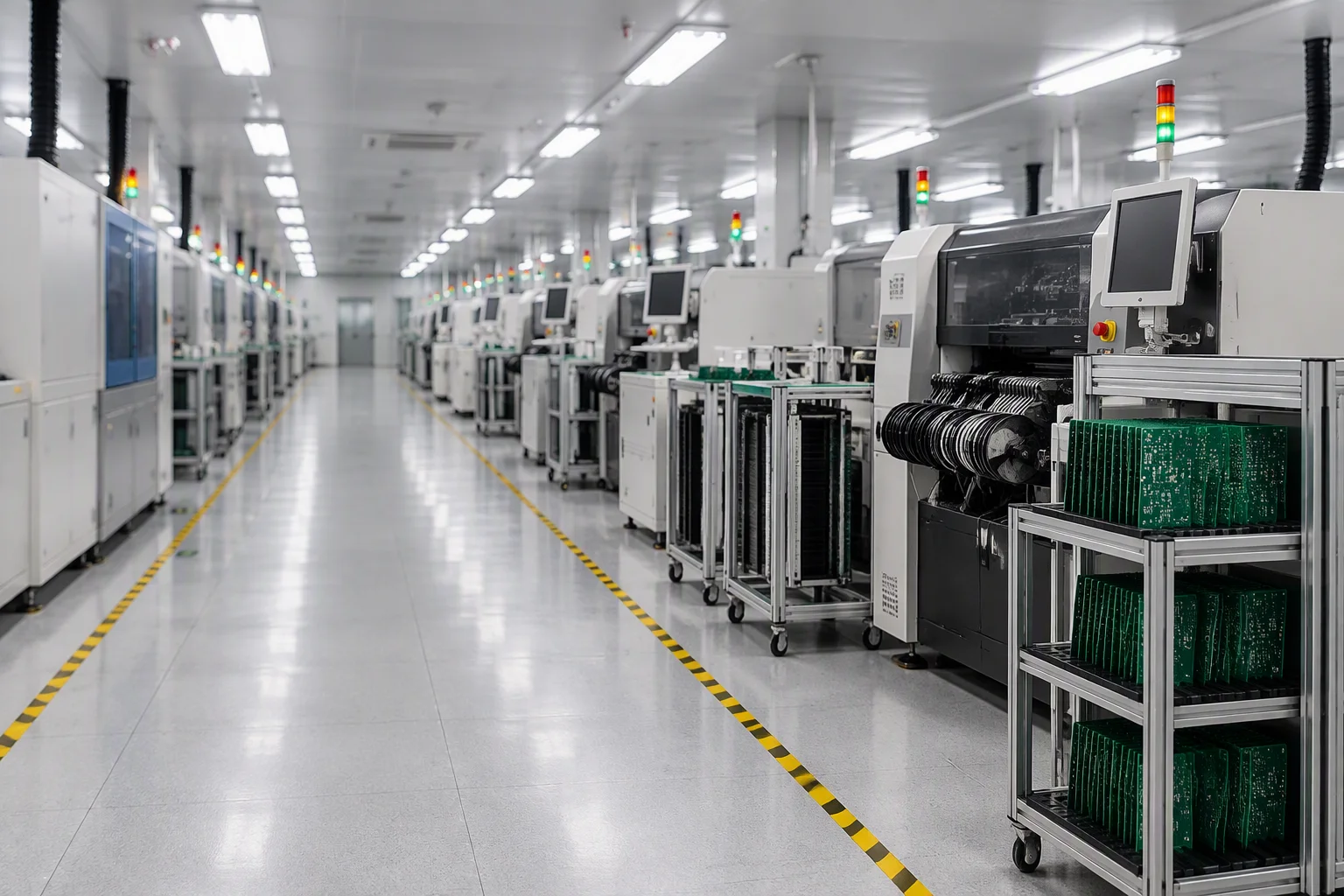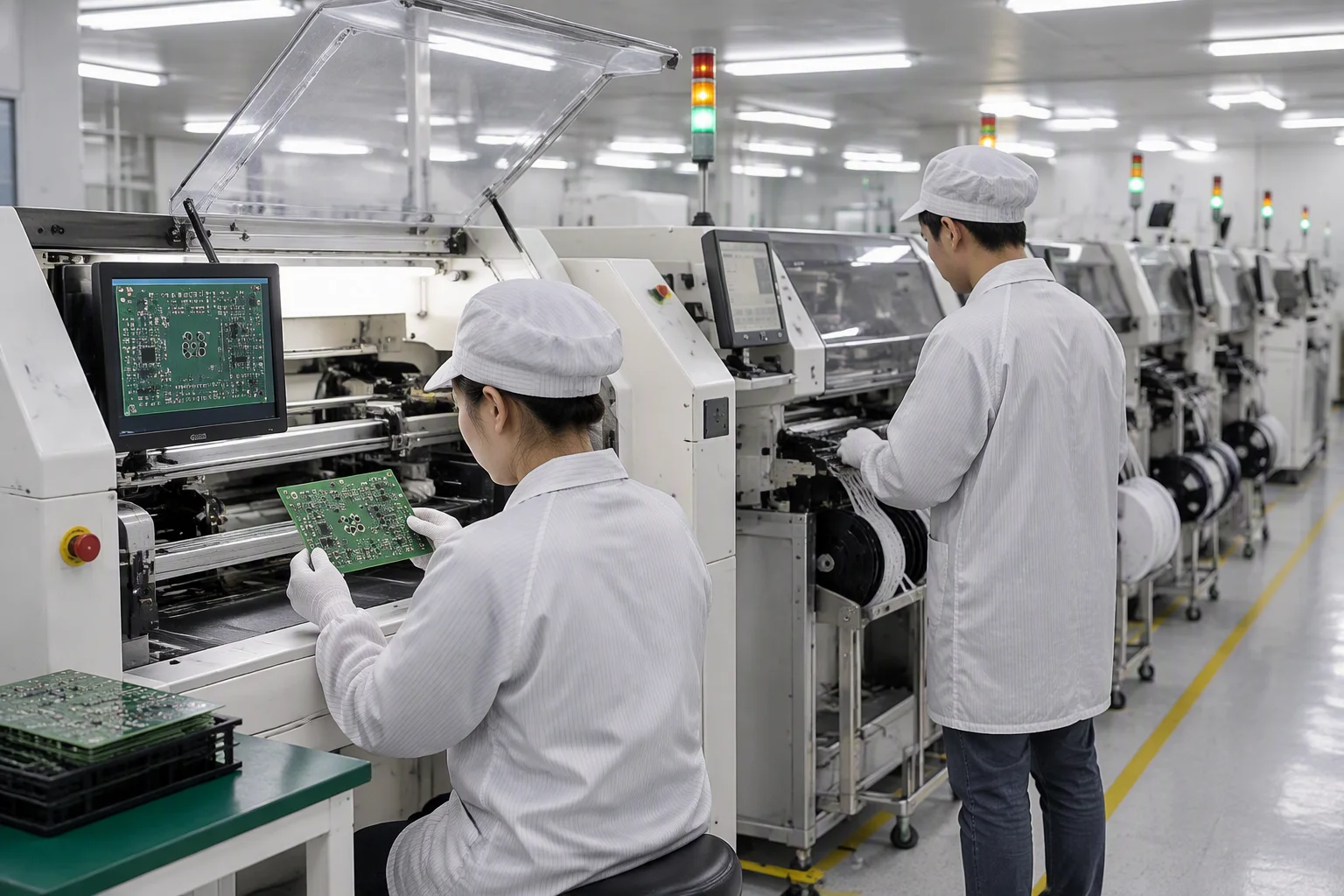
Nine lines in parallel
Printer, mounter, reflow and AOI on one rail, so a panel never leaves the line between print and inspection.
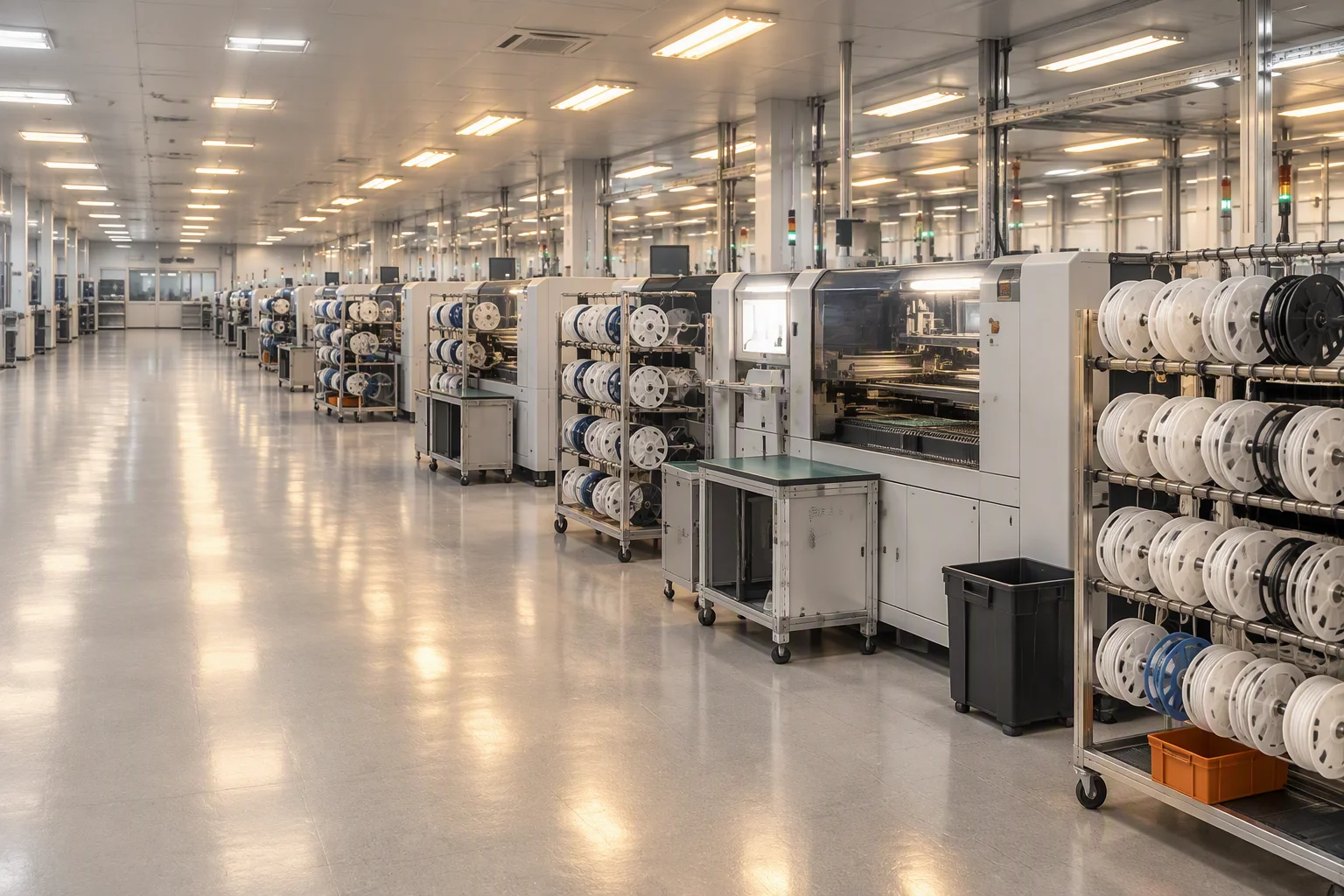
Shenzhen factory · Bao'an, Xixiang
Our own plant on the 4th Floor, Building 13, Rundongsheng Industrial Zone, 107 National Highway. Nine SMT lines and 4-5 DIP lines run in parallel on one quality system, producing 13,000 part numbers a month.
Equipment inventory
Model names, not adjectives. Every row below is a workshop section with the machines that work in it and the lines those machines are wired to.
| Section | Equipment in the section | Lines and throughput |
|---|---|---|
| Solder-paste printing | GKG stencil printers with vision alignment and squeegee-pressure control; laser-cut and electroformed stencils | 1 per SMT line · 9 SMT lines |
| High-speed placement | Yamaha YS24 and Yamaha YS12 modular mounters; ASM SIPLACE X4iS | 72,000 - 80,000 CPH per line, placement capability |
| Flexible placement | G5 and G9 placement lines for high-mix, quick-changeover work | 2 changeover-heavy lines alongside the volume lines |
| Reflow | Lead-free reflow ovens with operator consoles, 8-12 heating zones | 1 per SMT line · peak 245-260 °C |
| Paste and placement inspection | Koh Young 3D SPI; MENTO MT2000 3D AOI; Omron VT-RNS and SAKI BF-18D 3D AOI | 100% of boards, every SMT line |
| Hidden-joint and first-article inspection | Nordson DAGE XD7600NT digital X-ray cabinet; JCX FAI830 first-article tester | Minimum 5 boards per batch under X-ray |
| Electrical test | Takaya APT-1500F flying probe, 4 heads; Agilent i3070 in-circuit tester; custom FCT fixtures | 3,072 ICT test points; per-board pass/fail records |
| Through-hole and soldering | DIP insertion lines, wave-soldering machines, programmable selective soldering, hand-soldering benches, press-fit | 4-5 DIP lines · component height to 120 mm topside |
| Coating, assembly and pack-out | Conformal-coating and potting stations, ultrasonic plus DI-water cleaning, hand-assembly lines, ESD benches, finished-goods racks | 13,000 part numbers a month across the plant |
Material flow
Components and boards travel one route through the plant, and every handover between the five stages is signed off. Rejected material goes back to the IQC hold area instead of onward to a line.
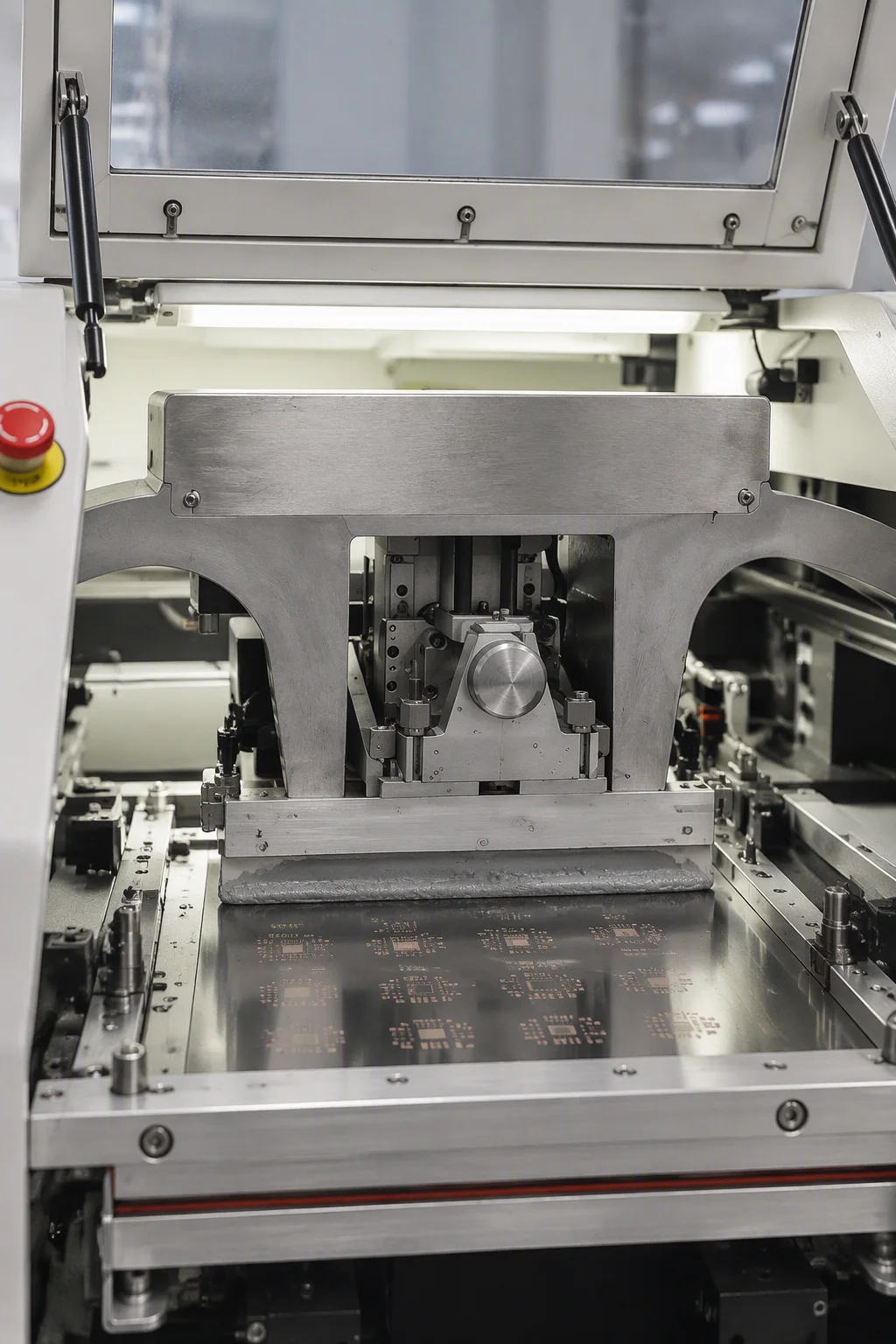
Solder-paste printing
Printing is where an SMT line succeeds or fails. Our GKG printers run vision alignment and closed-loop squeegee pressure, and a Koh Young 3D SPI station measures what actually landed on the pads.
SMT hall
Panorama, feeder bay, reflow exit and the work-in-progress rack, the four places a buyer asks to see on an audit.
Printer, mounter, reflow and AOI on one rail, so a panel never leaves the line between print and inspection.
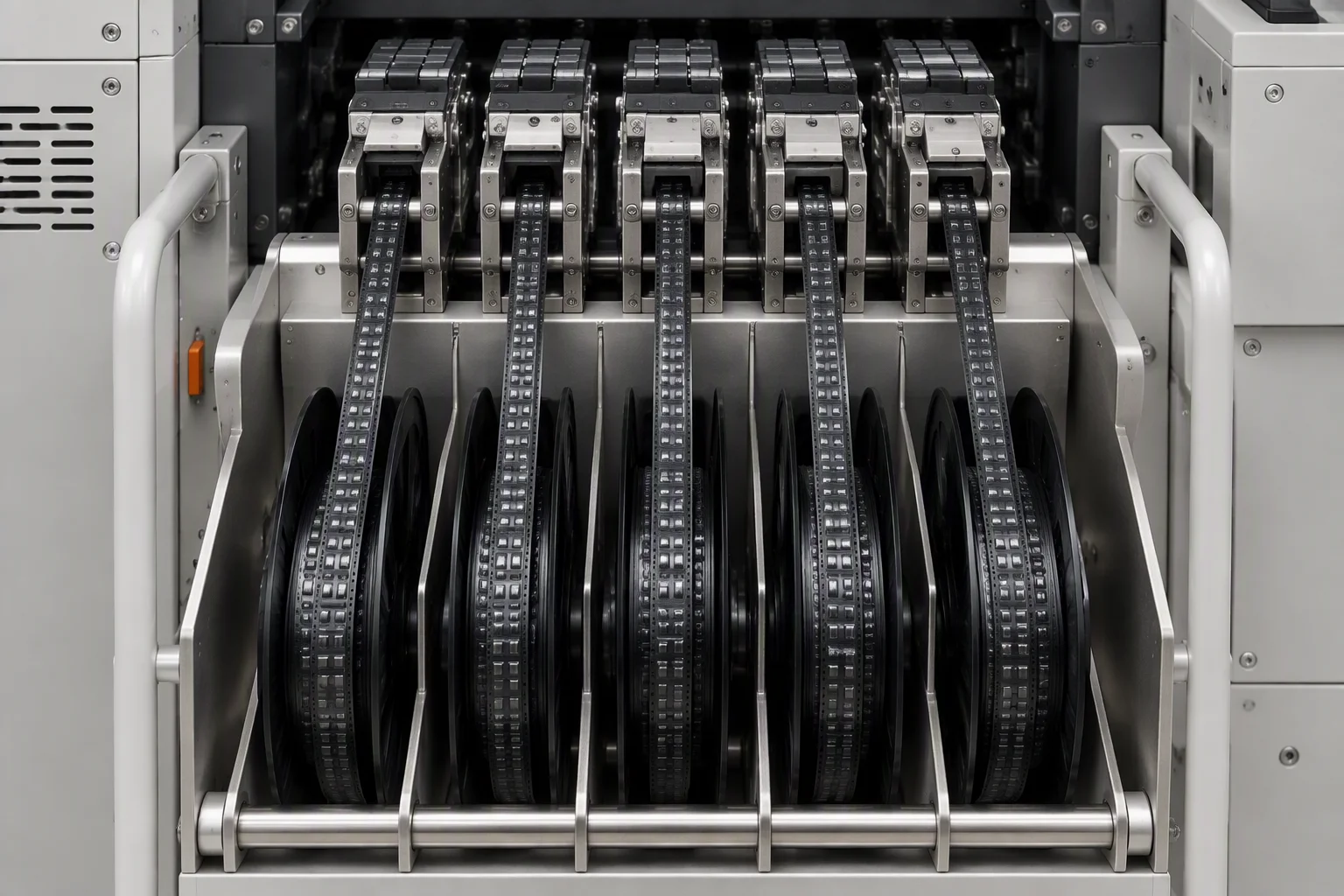
Reel, cut tape, tube, tray and loose parts all load here; placement accuracy is held at ±25 µm.
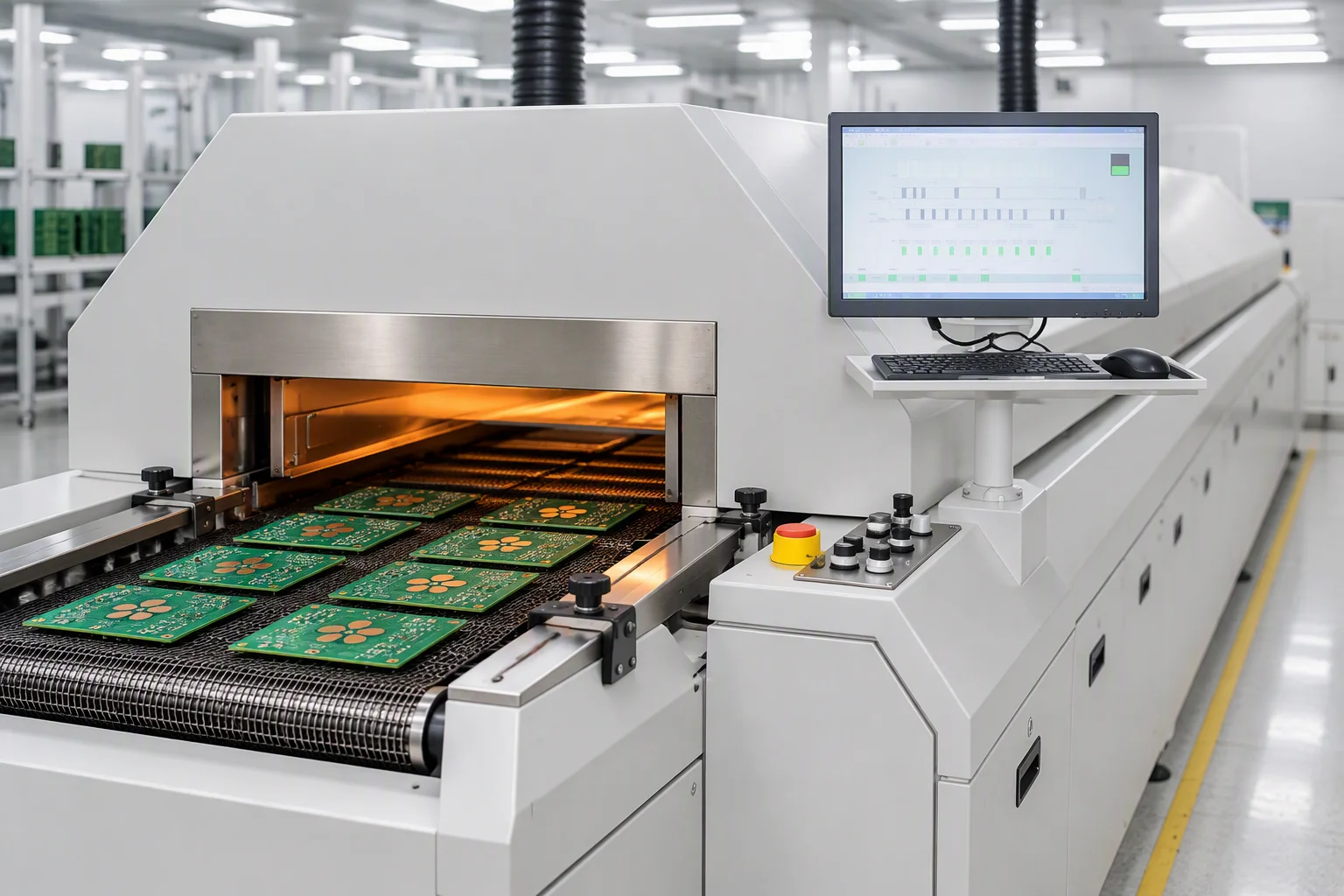
Peak 245-260 °C, profiled per assembly and logged against the work order.
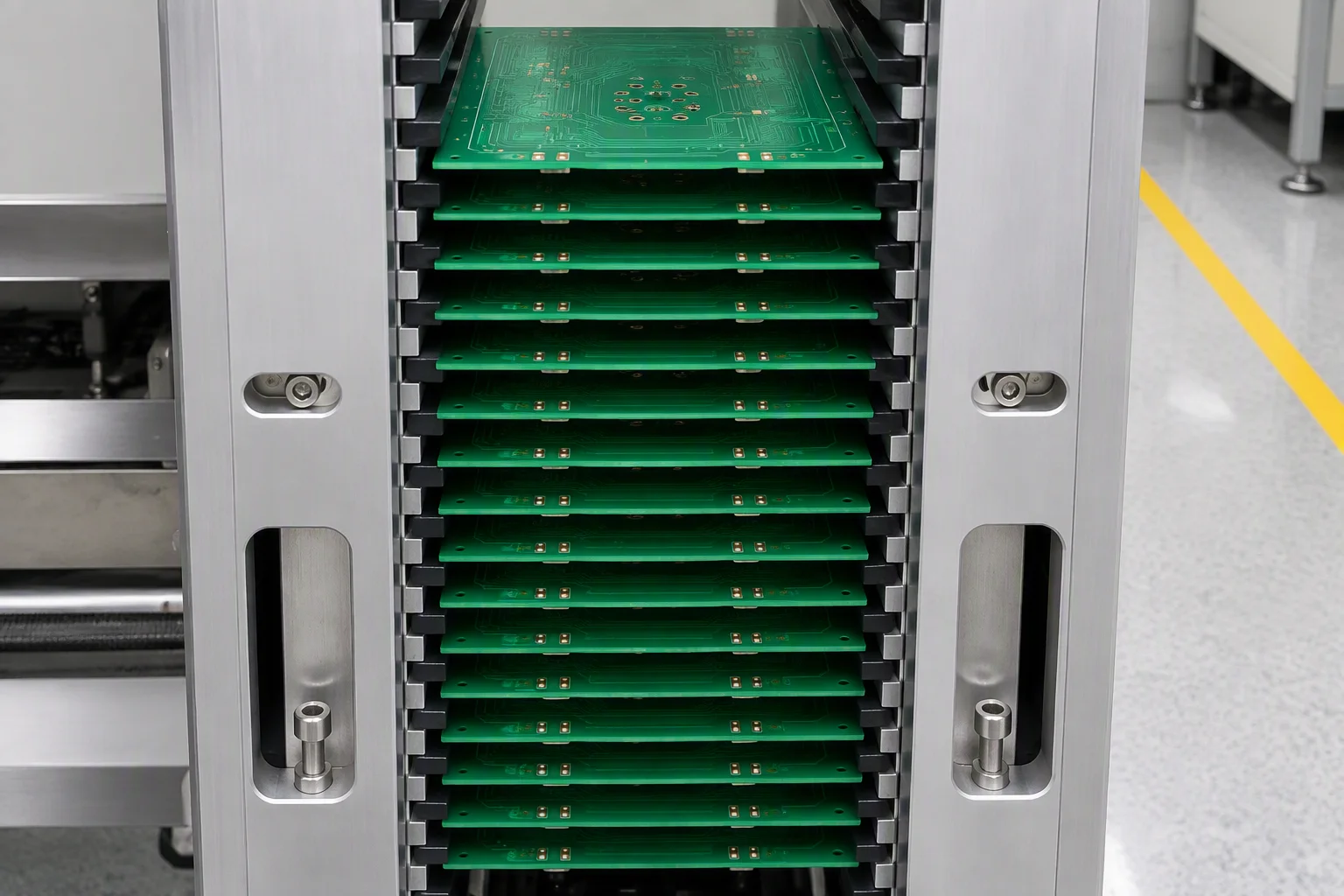
Every stack waits on a rack with its lot card; nothing sits loose on a bench between stages.
Named workstations
These are the stations a customer walks past on a visit, and the ones that carry the inspection evidence on the quality page.
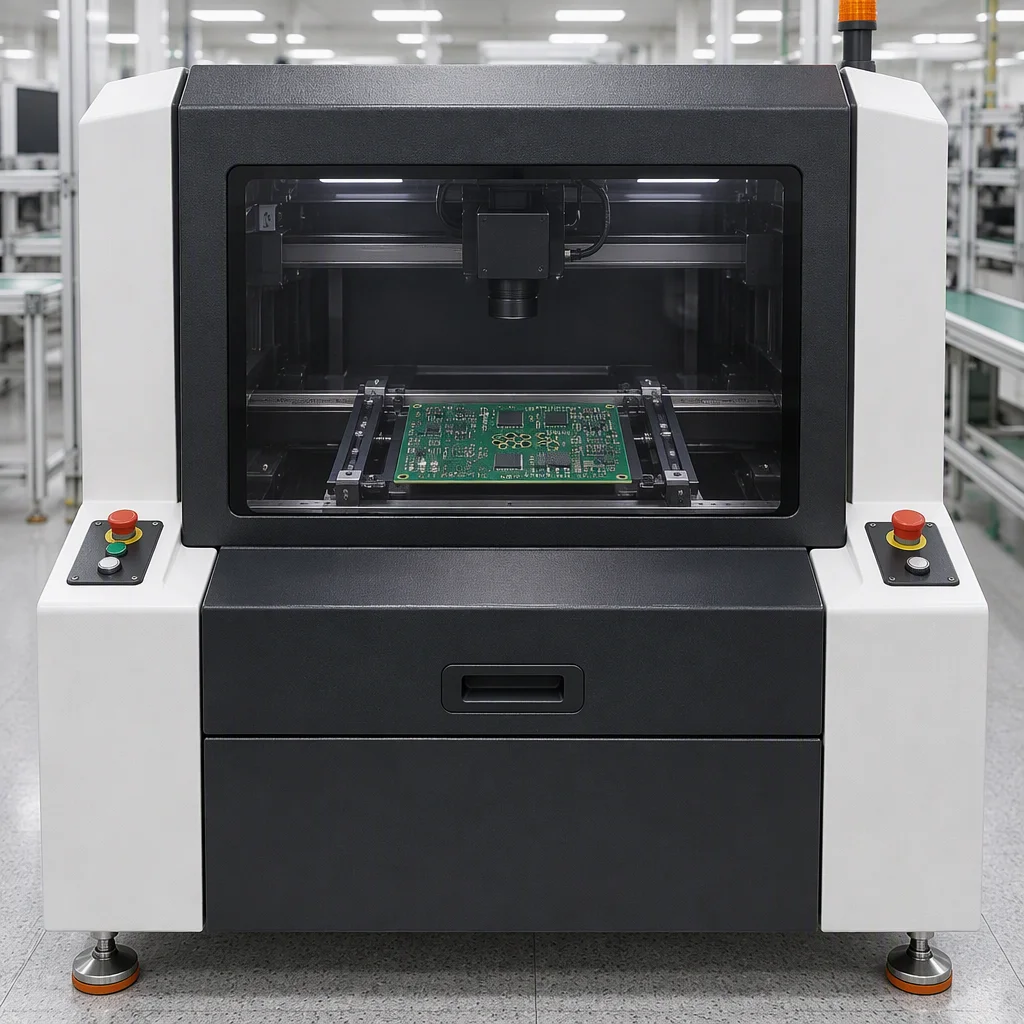
Runs on 100% of boards on every SMT line and checks missing parts, polarity, offset, tombstoning and joint shape.
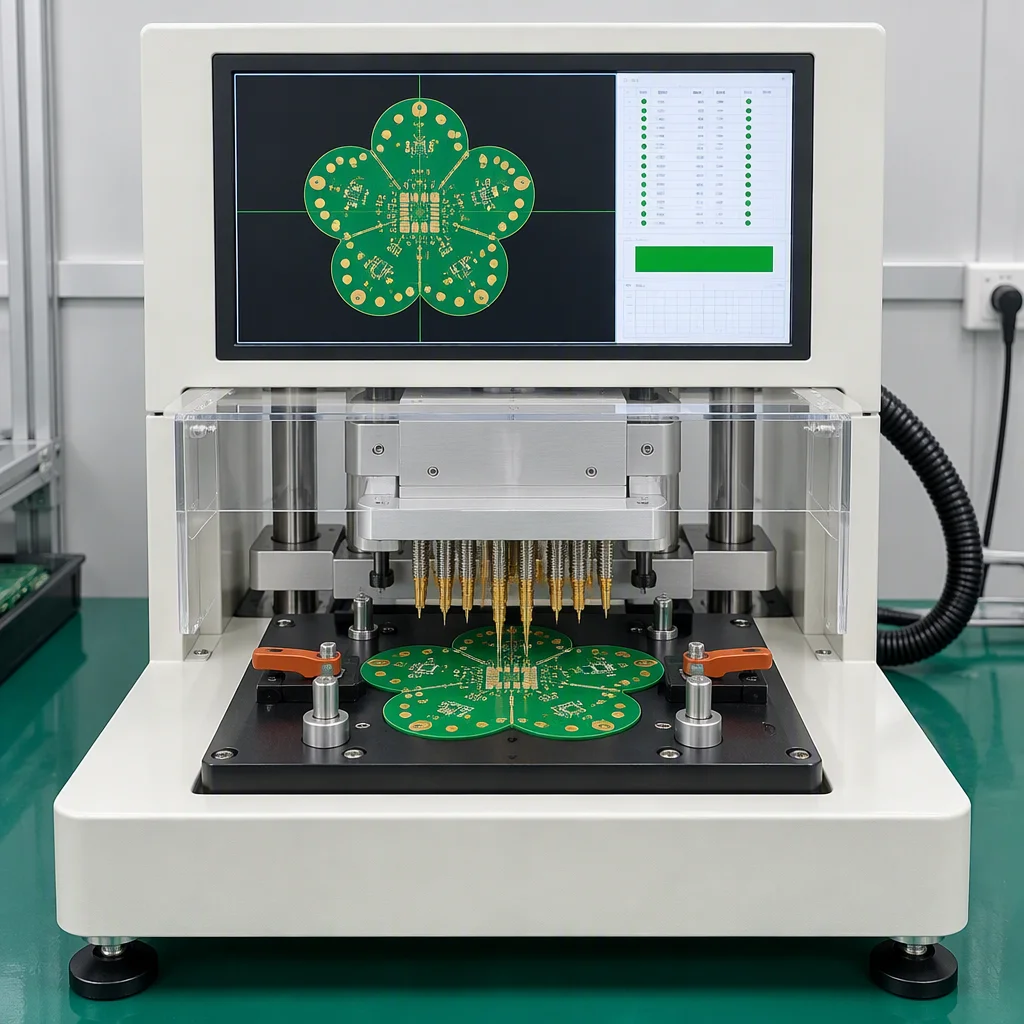
The first board of a run is measured and photographed before the line is released to volume production.
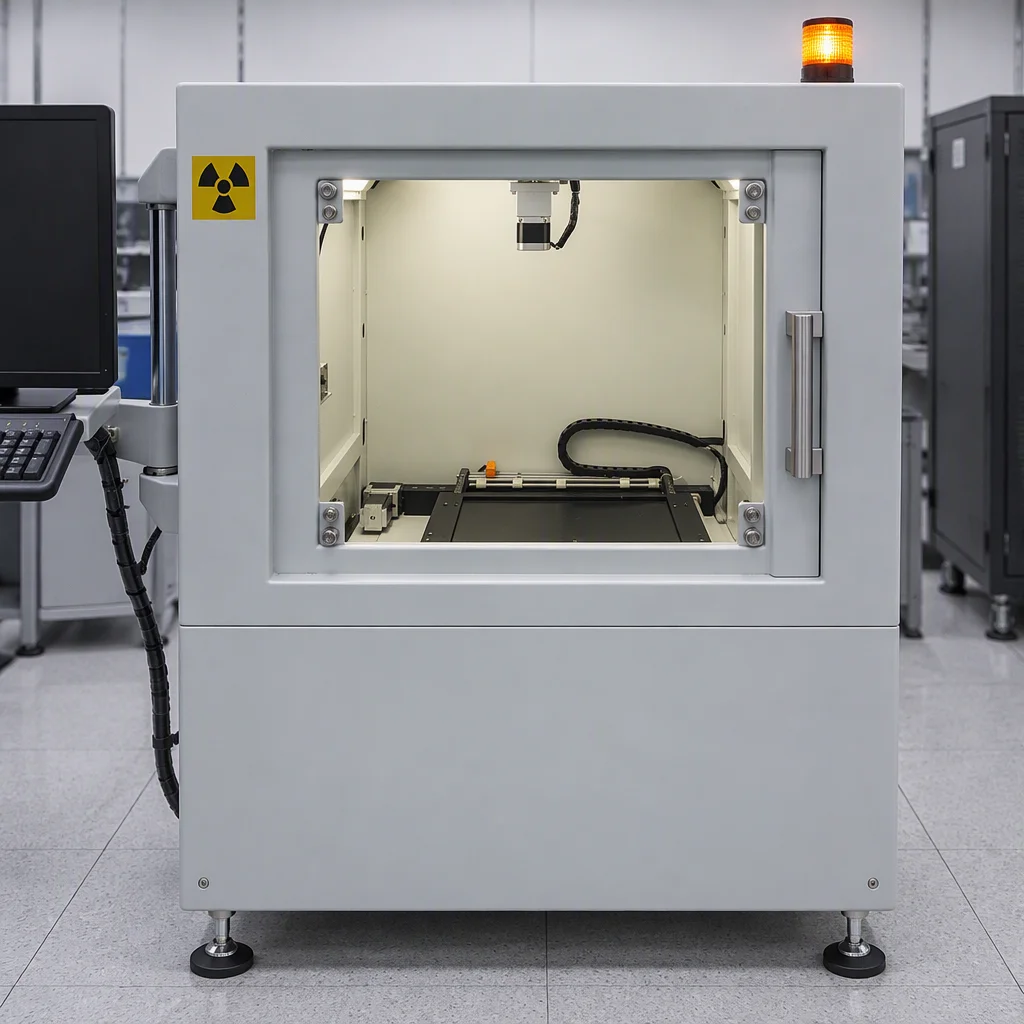
BGA, QFN and LGA joints are judged to J-STD-001 on a minimum of 5 boards per batch.
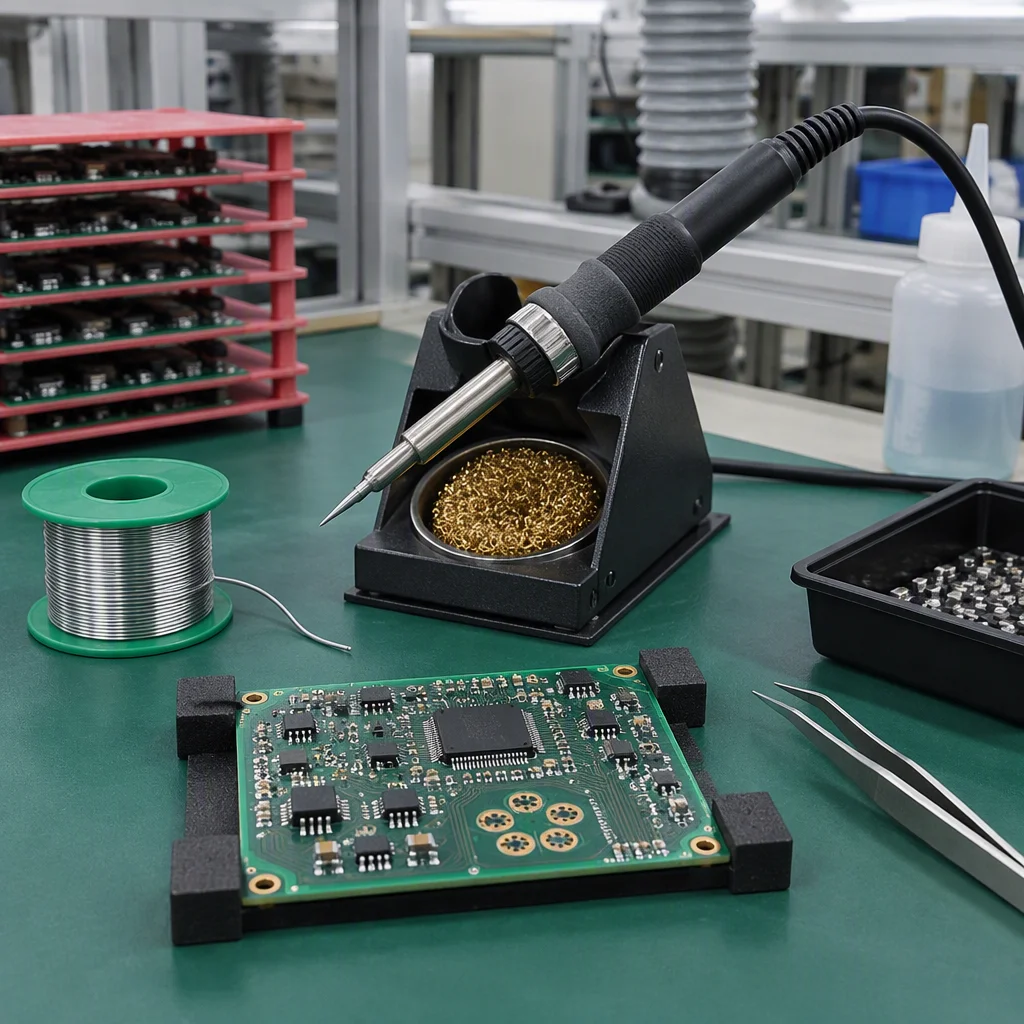
ESD benches to ANSI/ESD S20.20 for touch-up, press-fit connectors, wiring and final assembly.
Through-hole zone
Through-hole work is a parallel production module with its own lines, its own soldering methods and its own inspection gate.
Assembly and dispatch
Hand-assembly lines, coated and potted units, and the finished-goods racks that feed dispatch.
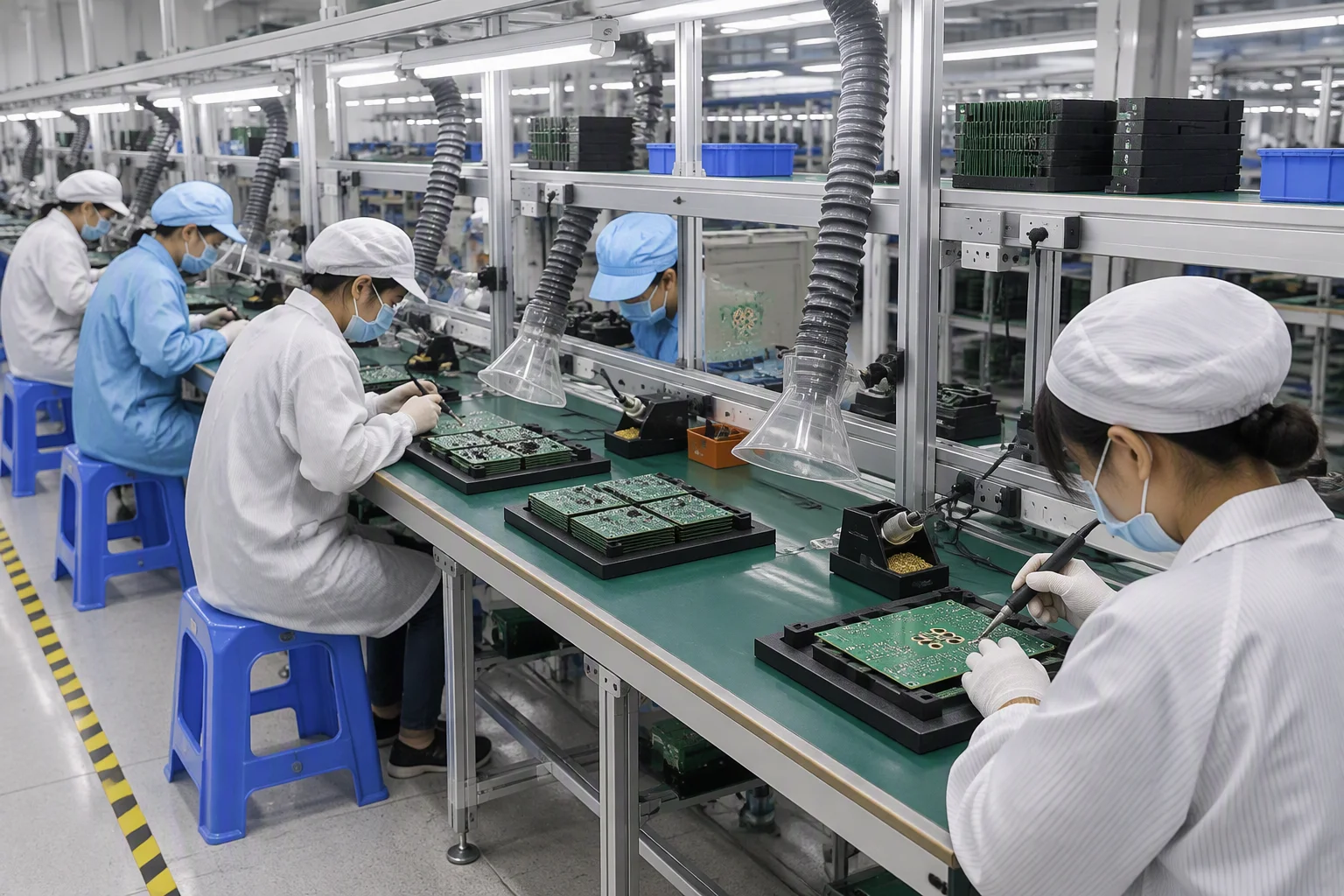 Hand-assembly line, conformal coating 25-210 µm by chemistry, IPC-CC-830B
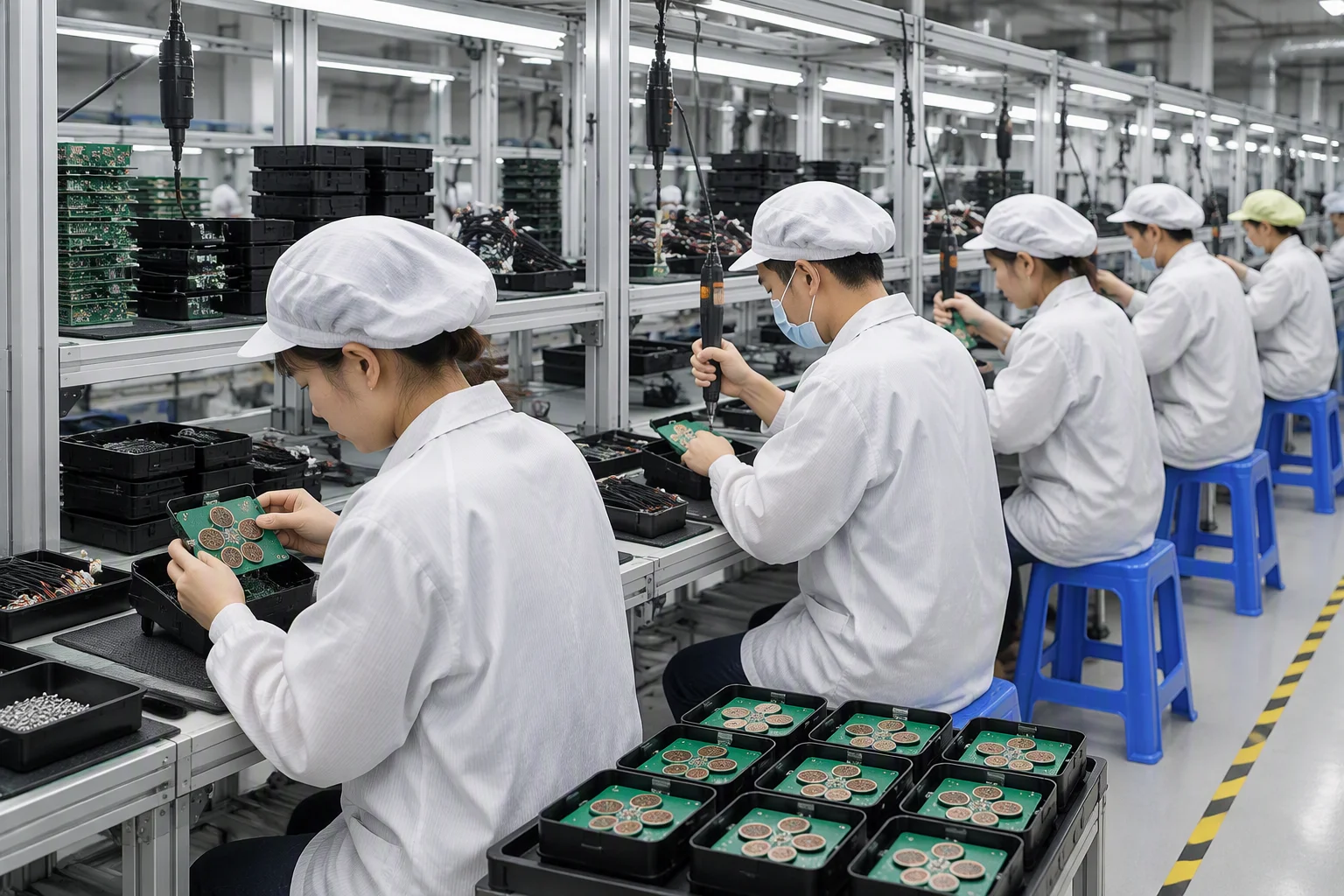 Assembly station, ultrasonic plus DI-water cleaning before final assembly
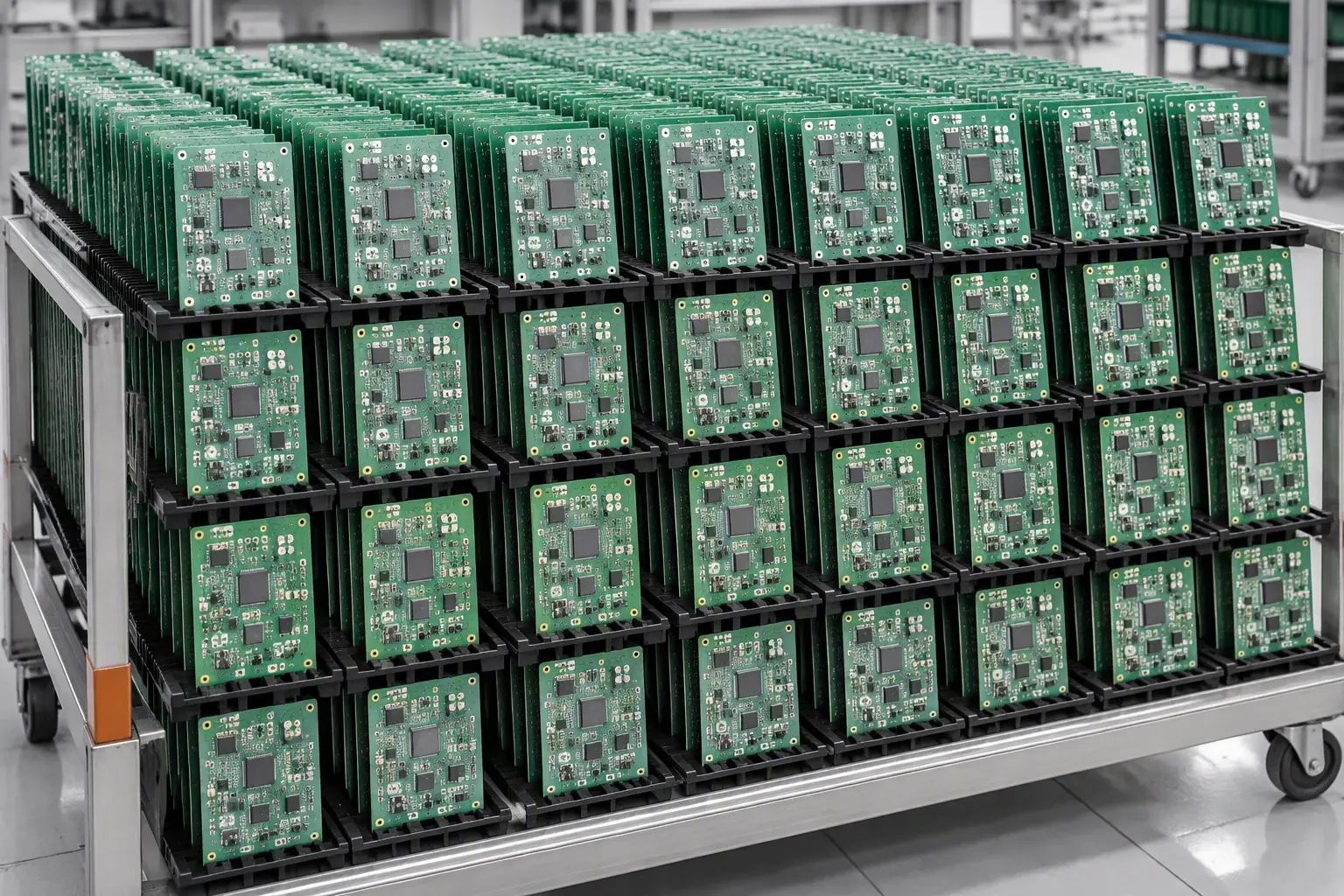 Finished goods, serialised where required, then bagged and boxed with dividers
Before you book a visit
Yes. Customer visits are routine, and we schedule them around your line of interest, SMT hall, DIP zone, inspection stations or dispatch. Send the dates you are considering and an engineer will confirm a slot and a walking route within one working day.
Resident inspection is arranged for series builds: your engineer signs off the first article against IPC-A-610 Class 2 or Class 3, watches the 3D AOI and X-ray gates, and co-signs the OQC sampling record before the cartons are sealed.
Photography of your own product, its fixtures and its test stations is allowed once an NDA is in place. We can sign an NDA covering non-use, non-disclosure and non-circumvention before any file or visit, and we do not photograph other customers' work.
The plant works to ANSI/ESD S20.20 with wrist straps, heel grounders, ESD flooring and grounded benches. Moisture-sensitive parts are stored below 40 °C and under 90% RH, and a part that has breached its floor life is baked at 125 °C , 9 hours for a saturated MSL 3 body of 1.4 mm or less.
Yes. There is no MOQ, order quantities start at 1 piece, and prototypes and series runs share the same nine SMT lines, the same 3D AOI gate and the same 3,072-point ICT or flying-probe programme. That is what keeps the first article and the fiftieth batch comparable.
Factory visit · 24-hour engineering review
Tell us which process you want to inspect and an engineer will confirm a visit slot, or send your files and get a DFM review with the quotation.
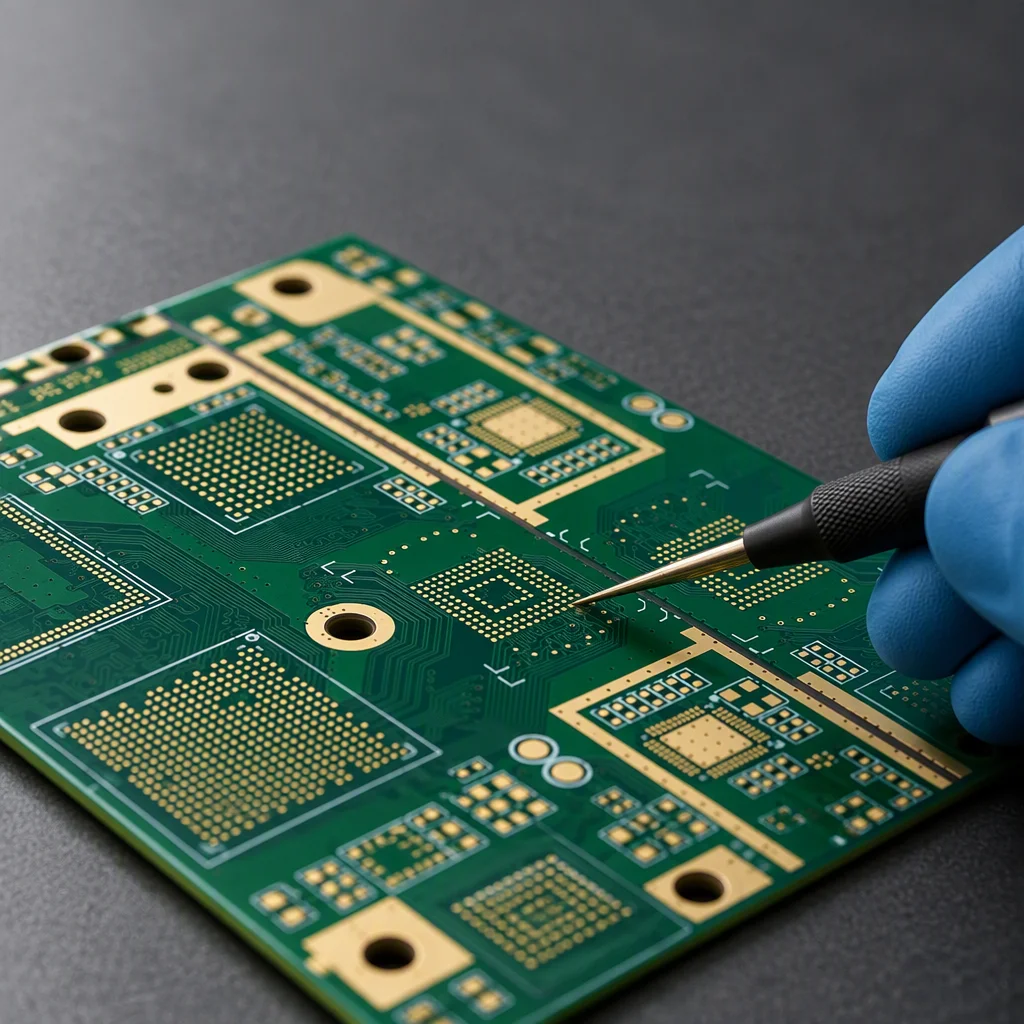
Send your Gerber, BOM or a plain description. An engineer, not a sales script, reviews it and replies within one working day. NDA on request.