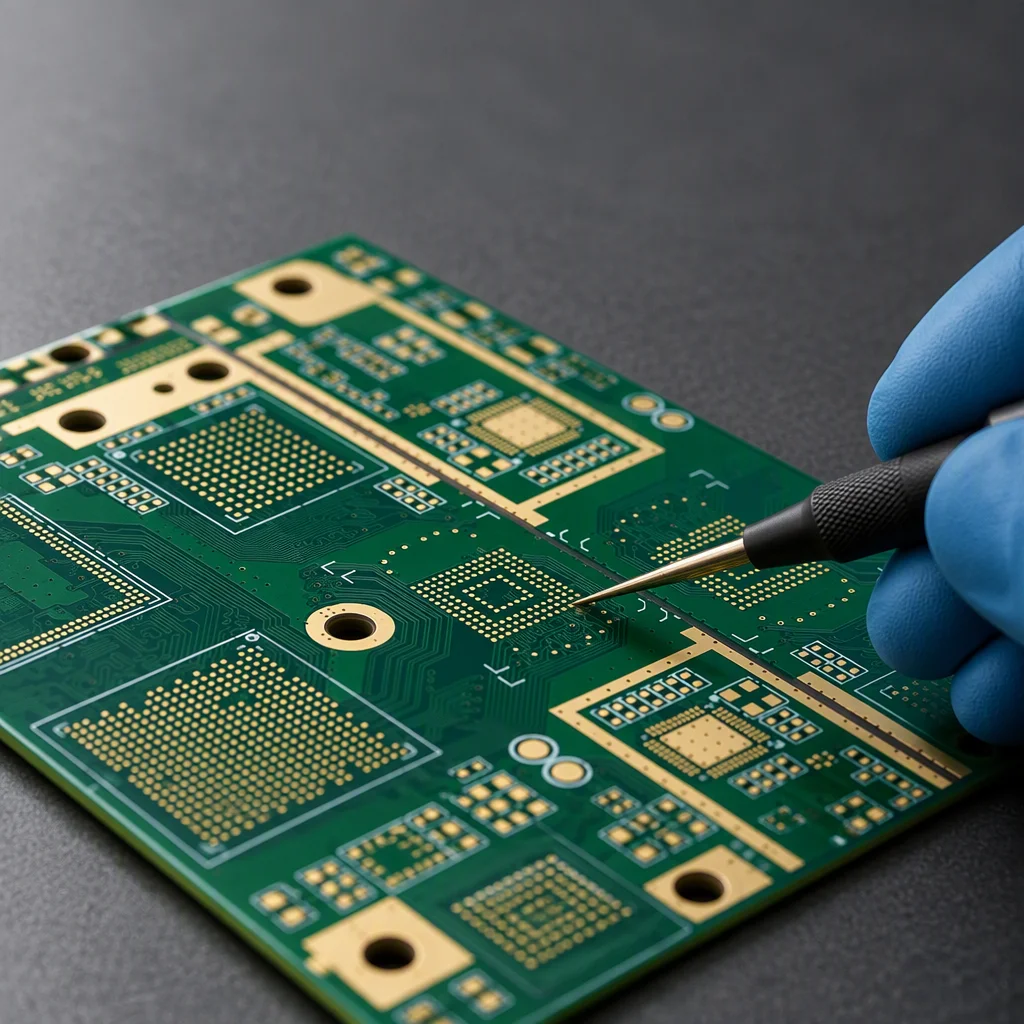
Smart-home hardware at volume, costed lever by lever
A hub, a KNX or Zigbee gateway or a sensor ships against a promotional
calendar, not a quarterly one. We build 4–6 layer FR-4 assemblies at
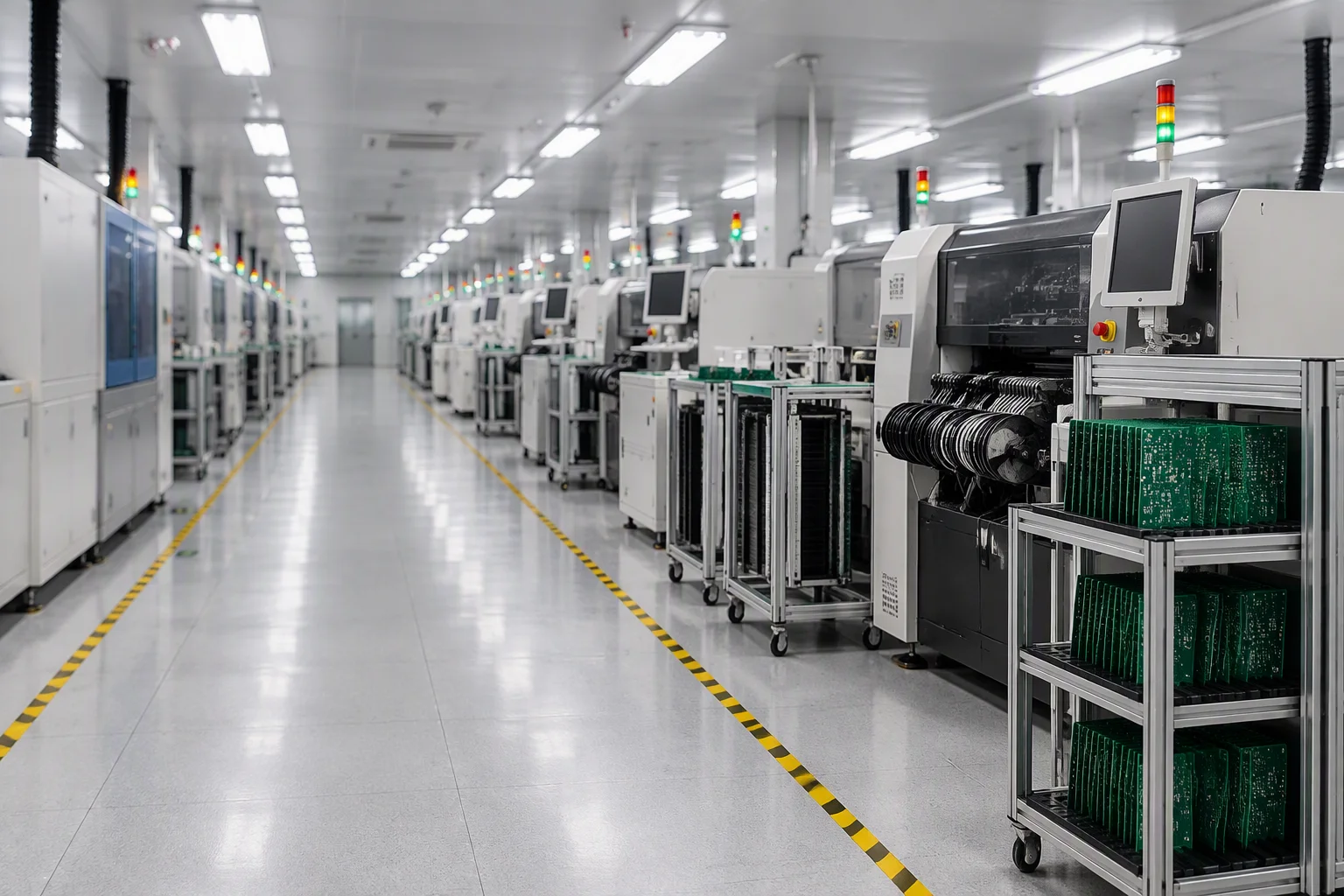
10,000–100,000+ units a year on nine SMT lines, no MOQ, and an engineering
review with the price inside 24 hours.
Consumer programmes are won on cost engineering and lost on the
calendar. These are the three pressures we hear from brand owners and design
houses before the first Gerber arrives.
01
10,000 – 100,000+ units / year
An 8–15% cost gap to close
Across those volume bands a landed board cost that is 8–15% heavier than
the target eats the promotional margin before the retailer does. The gap is
rarely one big item; it is layer count, panel border, finish and package count
adding up on the same bill of materials.
02
6 – 8 weeks of lead planning
The calendar is fixed before the BOM is
A promotional slot or a holiday roll-out is booked months ahead, so a volume
build has to be planned 6–8 weeks out. Material sets the schedule: in 2026
standard FR-4 copper-clad laminate alone runs 6–8 weeks, and the long-lead
lines have to be committed while the enclosure is still being tooled.
03
One colour, every panel
Cosmetic drift is what the buyer sees
Solder-mask shade, silkscreen bleed and a ragged break-off edge are judged by
the end customer, not by the IQC bench. Colour is a process control: a retained
master panel, a 0.1 mm minimum solder-mask web, and a panelisation that puts
every unit in the same position so the finish reads identically unit to unit.
Where the cost actually moves
Four levers, four engineered decisions
We do not quote a discount and we do not claim to beat another
supplier's price. We re-run the engineering before the price is written: these
four levers are where a consumer board gives cost back without giving up
function.
Layer reduction
A 6-layer stack that meets the same routing, plane and impedance rules at
4 layers removes two lamination cycles and two drill programs. We re-check the
stackup against the netlist before quoting rather than after the order.
Panel utilisation
Array size, rail width and break-off method are chosen against the
600 × 1200 mm sheet so the array tiles it with the least wasted border.
How many units a panel yields is decided at the array stage, and that count has
the largest single effect on unit cost.
Finish selection
Lead-free HASL at 1–40 µm is the low-cost finish for through-hole
and coarse SMT. ENIG (Ni 3–6 µm + Au 0.05–0.1 µm, IPC-4552) is
bought only where 0.25 mm-pitch BGA or fine-pitch flatness demands a planar
surface.
Part substitution and package merging
A pin-compatible alternative for a single-sourced or end-of-life part, and two
packages merged into one, each remove a feeder, a placement step and a reel
from the line. Every change is proposed in writing for your approval.
Radio modules and mixed density
Modules, shields and 01005 passives on one pass
A smart-home board is a radio module, a shield can, a mains front
end and a fine-pitch controller sharing one panel. All of it runs on the same
nine SMT lines, so a 500-unit trial and a 50,000-unit roll-out use one process
and one set of inspection records.
Module placement. KNX, Zigbee, Wi-Fi and BLE modules are placed and reflowed like any other component; the module vendor's reference layout freezes the RF keep-out, the antenna clearance and the ground plane underneath.
Shield-can placement. One-piece and two-piece shields go on the same reflow pass as the module they cover, with coplanarity checked before the can is seated.
01005 and 0.25 mm BGA mixed. 01005 passives and BGA down to 0.25 mm pitch share a panel at ±25 µm placement accuracy, with 3D SPI measuring paste volume and alignment before reflow.
Every feeder format. Reel, cut tape, tube, tray, loose parts and bulk are all accepted, so a trial build never has to re-package the BOM to match a line.
Component envelope. SMT parts to 25 mm height; wave-soldered parts to 120 mm on the top side and 15 mm on the bottom, which covers most hub and gateway mechanics.
Reflow window. 8–12 zone ovens with a lead-free peak of 245–260 °C, profiled per assembly rather than per product family, so a heavy mains section and a thin radio section share one profile.
Cosmetic control
Five solder-mask colours, one master panel
Green, red, yellow, blue, white and black LPI all run in-house.
Silkscreen is held to a 0.15 mm minimum line width at 0.8 mm character
height. Colour is treated as a process rather than a paint code: a 0.1 mm
minimum solder-mask web, one retained master panel per colour compared against
every production lot, and an array whose break-off tabs land in the same place on
every unit.
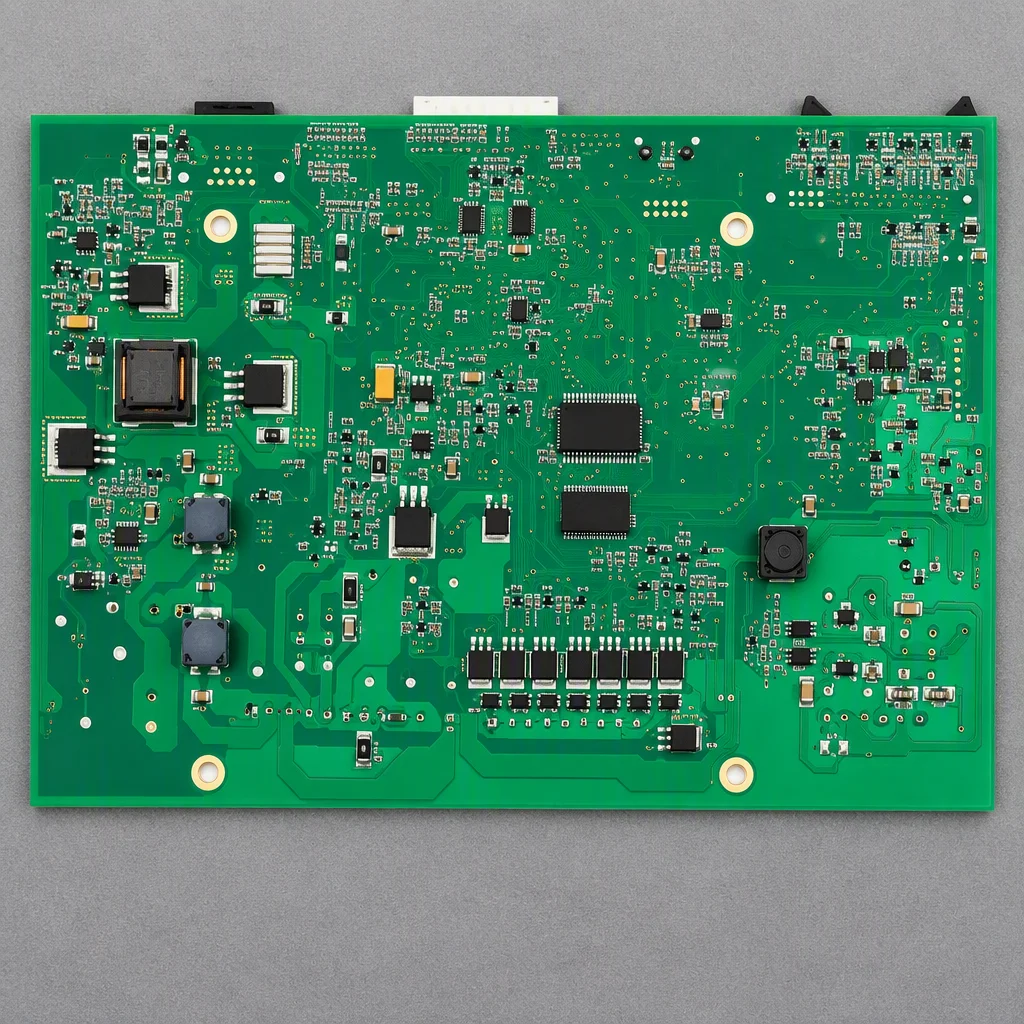
Green
The default for high-volume consumer boards and the
easiest shade to hold lot to lot.
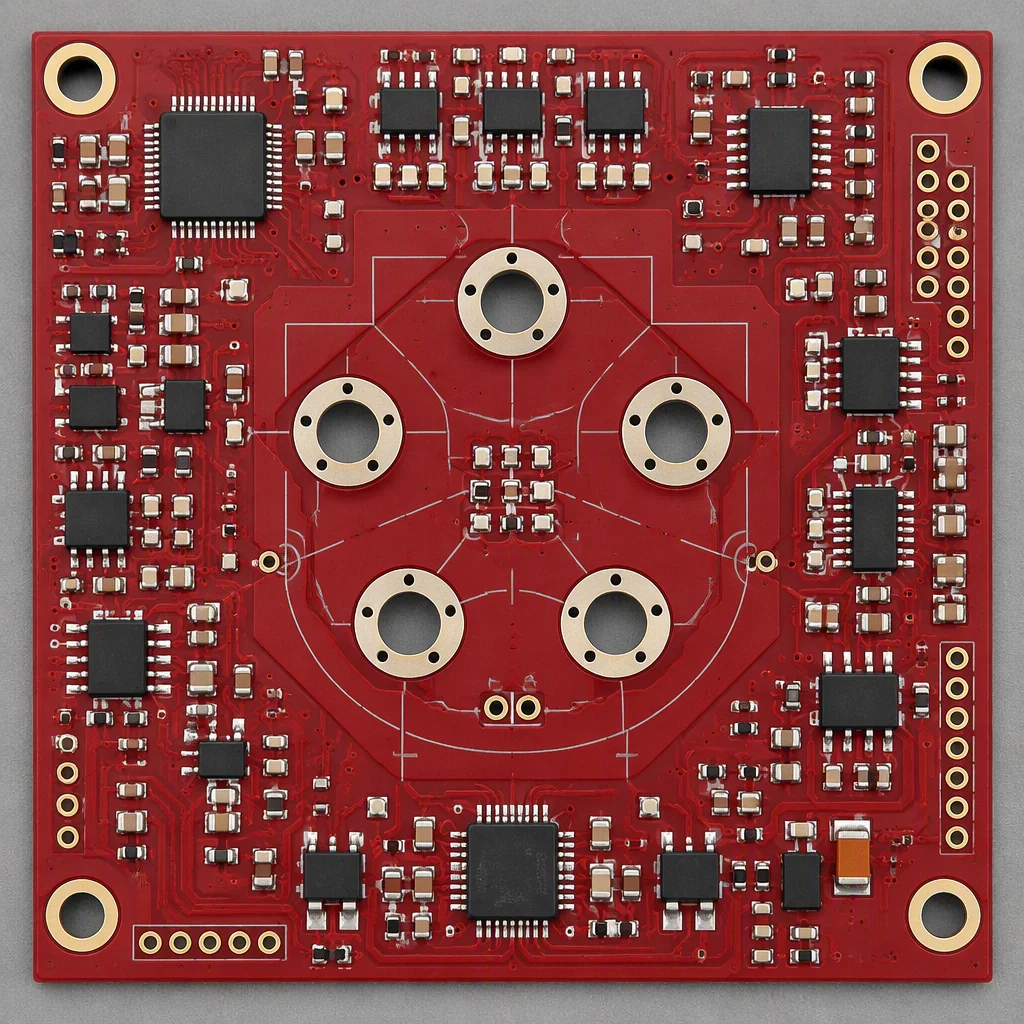
Red
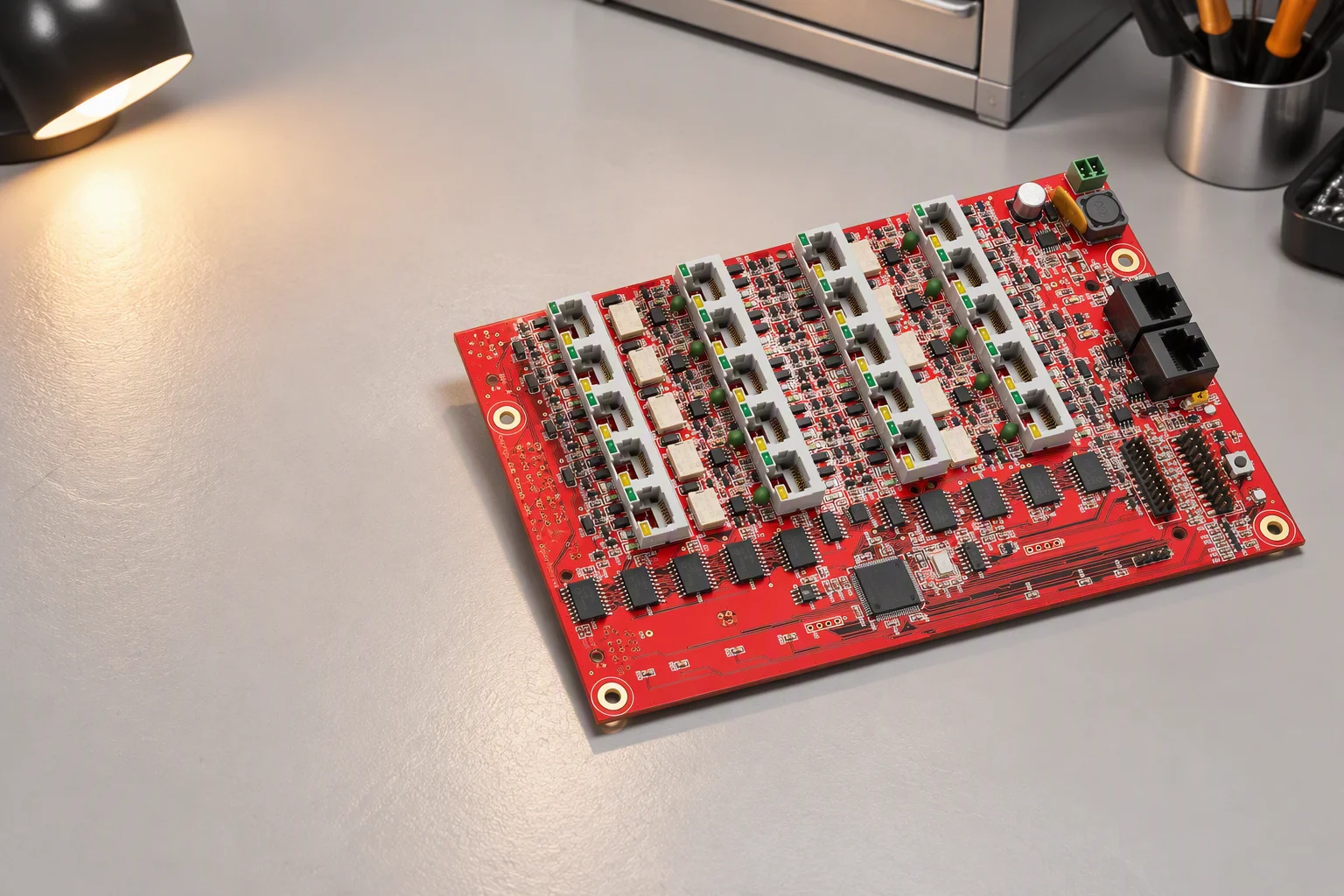
Used as a brand colour on hubs and sensors visible
through a vented housing.
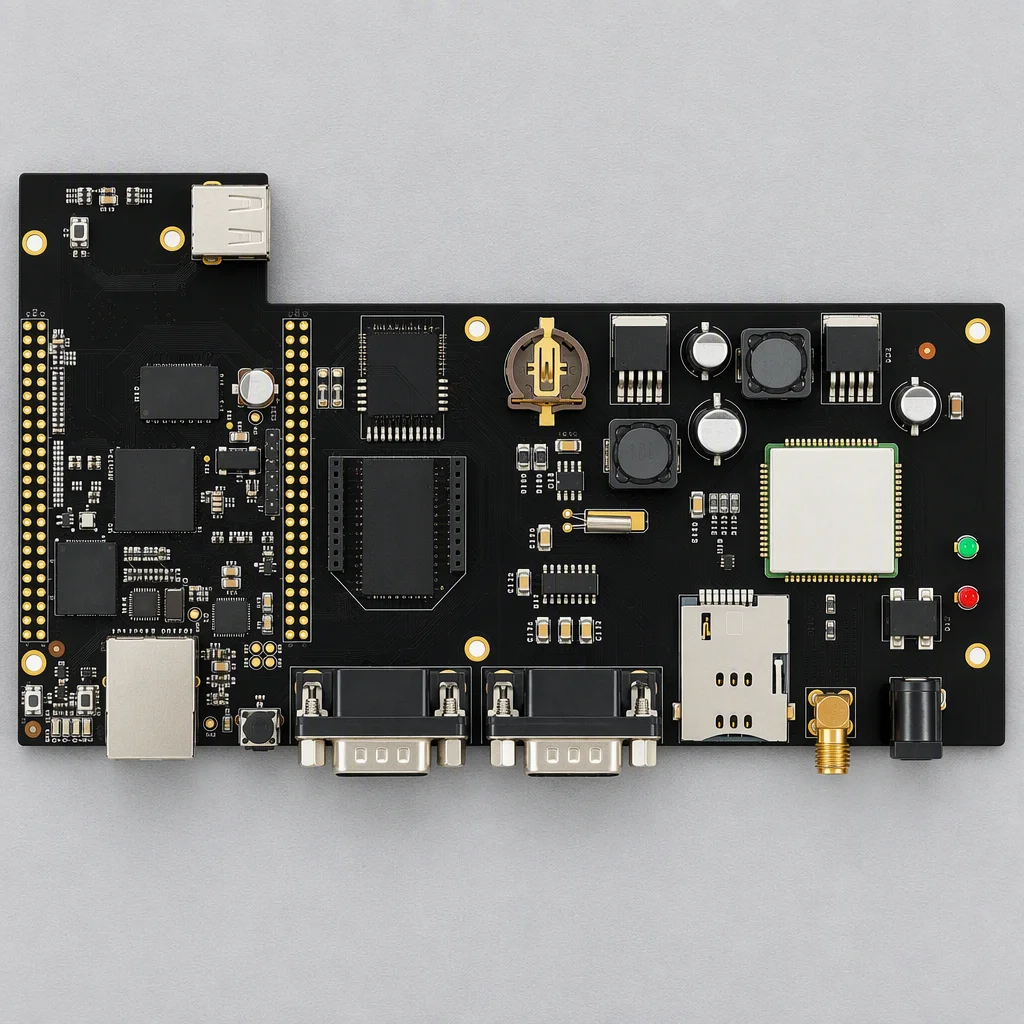
Black
For boards the user sees. Lowest contrast under AOI,
so the inspection recipe is locked and verified on the first article.
White
Specified for LED-adjacent boards and light-coloured
enclosures, where a matte surface reads better.
Blue
Chosen when the board is visible through a translucent
housing and the finish is part of the product.
Quality system and market access
Certified, recognised, compliant, each in its own words
Consumer buyers need a supplier whose paperwork survives an audit
and whose documents feed a market submission. 3D AOI covers 100% of boards on
every SMT line, digital X-ray inspects a minimum of 5 pieces per lot on BGA and
shielded assemblies, ICT verifies up to 3,072 test points, and OQC samples to AQL ANSI/ASQ Z1.4 (general inspection level II, single sampling, normal severity, AQL 0.65 for major defects).
ISO 9001:2015 certifiedUL 796 recognisedRoHS & REACH compliantCE: supports your submissionIPC-A-610 Class 2 & 3 workmanship
ISO 9001:2015
Quality system certified to ISO 9001:2015 and audited annually by SGS. Consumer builds add the two checks this vertical actually fails on: cosmetic acceptance of the solder-mask and legend, and 100% 3D AOI on every SMT line so an escape cannot reach a retail carton.
UL 796
Recognised printed wiring board manufacturing, held with UL
for the fabrication process, for end products that need a UL component
recognition.
RoHS & REACH
Compliant lead-free lines. Declarations of conformity come
from the laminate and component suppliers, and a per-board material declaration
report ships with the lot on request.
IPC-A-610 Class 2 & 3 workmanship
The final visual inspection standard applied on the floor,
worked alongside IPC-A-600, IPC-6012 and J-STD-001. Consumer assemblies run at
Class 2 unless a programme is ordered at Class 3.
UL 62368-1 · UL 94 V-0
Build and laminate choices that support a UL 62368-1
submission, on board material rated UL 94 V-0.
CE and FCC support
Factory-side CE: supports your submission. We support your CE and
FCC Part 15B submissions rather than claiming those marks for the plant.
Full scanned certificate package released on request.
Application case
Smart-home hubs and gateways
A project type we build regularly: a hub board carrying a radio
module, a mains front end and a user interface on one 4–6 layer FR-4 panel,
at 10,000–100,000 units a year.
Requirement. Single-sided assembly where the mechanics allow it, a shielded radio module on the same panel as the mains section, and a visible housing colour that must not drift between lots.
Solution. The array was re-tiled against the 600 × 1200 mm sheet to cut border waste, the radio feed was defined at 50 Ω single-ended and 100 Ω differential, and the module and its shield can share one reflow pass.
Outcome. 100% AOI coverage on every board, X-ray on a minimum of 5 pieces per lot at the shielded module, OQC sampled to AQL ANSI/ASQ Z1.4 (general inspection level II, single sampling, normal severity, AQL 0.65 for major defects), and a retained colour master compared against each production lot.
Volume bands of 1–50 pieces for a pilot, 10,000–100,000+
a year in series. Tell us the target cost and we will come back with the
levers, not a discount.